Health SystemsOctober 2026 | India Brief | Issue 02
Health Systems Intelligence
Connecting scale with better care
Digital health, adult vaccination, surveillance and financing: what India's expanding programmes need to turn wider reach into more reliable care.
By Dr. Pragath Kumar Ponnam · Advisor, Health Systems Strengthening
16 October 2026 · 2 min read
India’s expanding health programmes face a practical challenge: making services work together. Digital health, adult vaccination and surveillance now put implementation at the centre of the agenda. The test is whether wider reach delivers more reliable care and better outcomes.
01 Digital Health
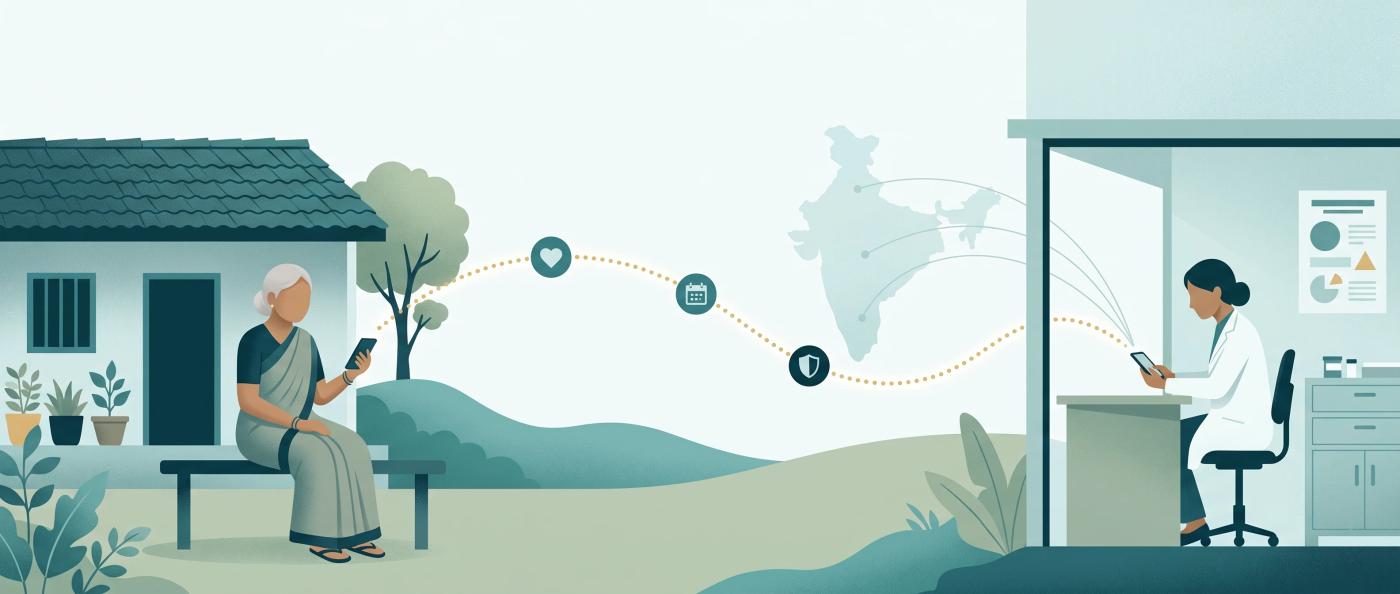
The Unified Health Interface, launched on 29 June, allows patients and providers to connect across compatible applications. Diagnostics and vaccination booking are among the planned additions.1 Provider participation and completed care journeys will determine its value.
02 Immunization
Goa adopted its Policy for Life-course Immunization 2026–2036 on 23 September. Initial delivery prioritises influenza, pneumococcal and hepatitis B vaccines for eligible adults, including people with chronic conditions and healthcare workers.2 Coverage, delivery costs and real-world effectiveness will help other states judge what is transferable.
03 Surveillance
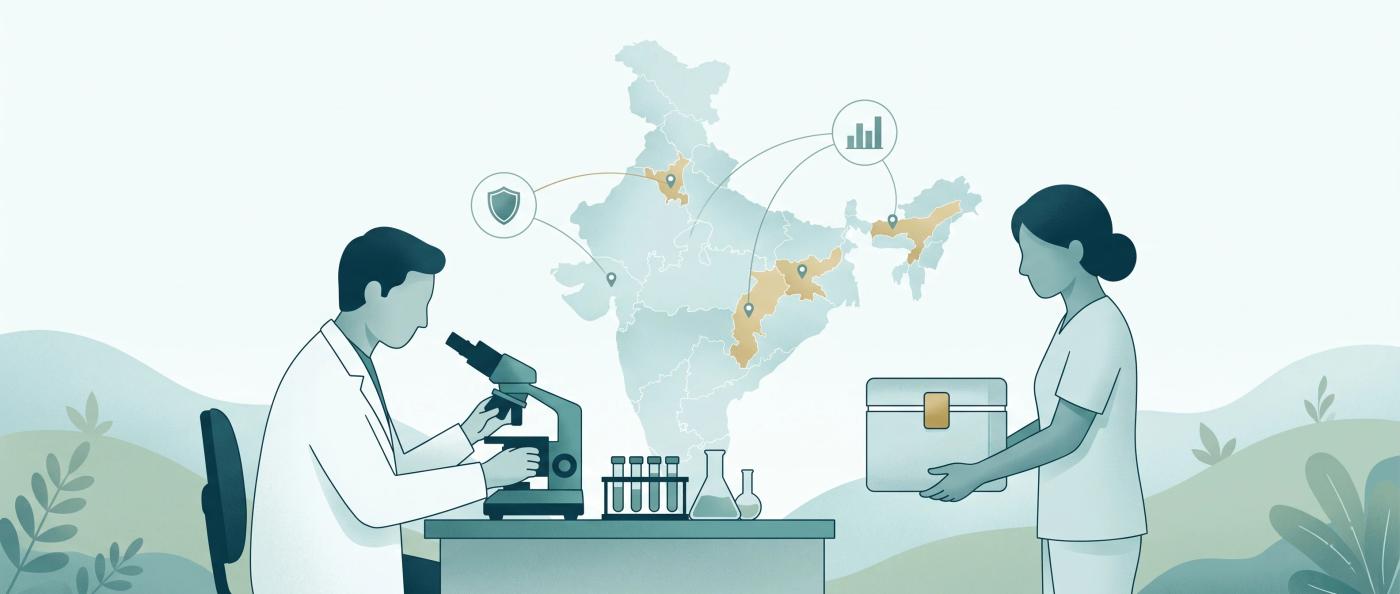
Vaccine-preventable disease surveillance is moving from the WHO-supported NPSN to IDSP–NCDC. NCDC lists 388 districts for transition by 31 March 2027, the target for full national ownership.3 District staffing, laboratory links and timely investigation will be critical to sustaining surveillance quality.
04 Health Financing
At Arogya Manthan on 25 September, the government reported over 13 crore hospital admissions under AB PM-JAY, with treatment worth more than ₹2 lakh crore. An auto-adjudication framework was also launched.4 The next test is whether claims processing improves alongside care quality, payment accuracy and financial protection.
05 The Number
50 crore
teleconsultations
eSanjeevani passed this cumulative milestone on 15 September 2026, as announced on 6 October.5 This measures consultations, not unique patients. Referral completion and equitable access deserve equal attention.
06 What NirvaNex Is Watching
Over the coming months: uptake of UHI services; early delivery evidence from Goa; district readiness for the March 2027 surveillance transition; and whether health AI evaluations demonstrate useful, safe performance in routine care. Future editions will revisit these questions as evidence emerges.
07 NirvaNex Perspective
Integration needs operational follow-through. NirvaNex proposes the following priorities for programme leaders, adapted to local capacity.
Short term · Next 3–6 months
District teams should:
- test one referral pathway and track completion
- check surveillance staffing and specimen transport before handover
- pilot adult vaccination through existing chronic-care clinics where policy permits, recording uptake and missed visits
Long term · Next 1–3 years
State leaders should:
- fund recurring surveillance posts and laboratory capacity
- require interoperable systems with consent safeguards in procurement
- use independent evaluation of costs, outcomes and equity to guide vaccination expansion and hospital purchasing